- Home
- Tutorial
- Resource Guides
- Focus Areas
- LSF Programs
-
Professional
Development - Review Process
-
A project of LSF

Search for Resources
Description
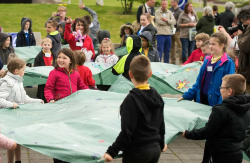
The Wildlife Corridor Game uses a parachute-style game to demonstrate how we can make school grounds more wildlife friendly. This outdoor activity helps students understand biodiversity, interdependence, and how connected habitats support animals and pollinating insects. Students should have prior knowledge of animals’ basic needs, such as food, water, and shelter, and an understanding of the importance of biodiversity and pollinators.
Using tarpaulins and bean bags, students simulate pollinating insects moving between fragmented field habitats. They then add a third tarpaulin to represent a wildlife corridor and observe how the connection makes movement between habitats easier. The activity demonstrates how corridors provide safer access to food and shelter and help maintain healthy wildlife populations.
Students discuss how school grounds could create habitat connections with surrounding landscapes by adding wildlife-friendly features that support biodiversity.
General Assessment
Recommendation of how and where to use it
This primary science activity introduces students to habitat fragmentation and explores how wildlife corridors can help reconnect these habitats and support biodiversity. This activity can be extended into a place-based inquiry where students can explore the schoolyard to identify existing habitats, gaps, and opportunities to create connections for wildlife and pollinators. They can map the area, investigate local species, and design a wildlife corridor using native plants, recycled materials, or other locally available resources. Students can then create or improve a small habitat area and monitor how it supports biodiversity over time.
Relevant Curriculum Units
The following tool will allow you to explore the relevant curriculum matches for this resource. To start, select a province listed below.
- Step 1Select a province
- Alberta
- Step 2Select a grade level
- Grade 1
- Step 3Select a subject
- Science
- Step 4Relevant matches
- Living Systems: Understandings of the living world, Earth, and space are deepened by investigating natural systems and their interactions.
- Grade 2
- Step 3Select a subject
- Science
- Step 4Relevant matches
- Living Systems: Understandings of the living world, Earth, and space are deepened by investigating natural systems and their interactions
- Grade 3
- Step 3Select a subject
- Science
- Step 4Relevant matches
- Living Systems: Understandings of the living world, Earth, and space are deepened through investigating natural systems and their interactions
- British Columbia
- Step 2Select a grade level
- Grade 1
- Step 3Select a subject
- Science
- Step 4Relevant matches
- Science 1: Living things have features and behaviours that help them survive in their environment
- Grade 3
- Step 3Select a subject
- Science
- Step 4Relevant matches
- Science 3: Living things are diverse, can be grouped, and interact in their ecosystems
- Grade 4
- Step 3Select a subject
- Science
- Step 4Relevant matches
- Science 4: All living things sense and respond to their environment
- Manitoba
- Step 2Select a grade level
- Grade 1
- Step 3Select a subject
- Science
- Step 4Relevant matches
- Life Systems
- Grade 2
- Step 3Select a subject
- Science
- Step 4Relevant matches
- Life Systems
- Grade 3
- Step 3Select a subject
- Science
- Step 4Relevant matches
- Life Science
- Grade 4
- Step 3Select a subject
- Science
- Step 4Relevant matches
- Life Systems
- New Brunswick
- Step 2Select a grade level
- Grade 1
- Step 3Select a subject
- Science
- Step 4Relevant matches
- Explore Your World: Play and Playfulness
- Grade 2
- Step 3Select a subject
- Science
- Step 4Relevant matches
- Explore Your World: Play and Playfulness
- Grade 3
- Step 3Select a subject
- Science
- Step 4Relevant matches
- Our Local Environment : Learning and Living Sustainably
- Newfoundland & Labrador
- Step 2Select a grade level
- Grade 1
- Step 3Select a subject
- Science
- Step 4Relevant matches
- Needs and Characteristics of Living Things
- Grade 2
- Step 3Select a subject
- Science
- Step 4Relevant matches
- Animal Growth and Changes
- Grade 4
- Step 3Select a subject
- Science
- Step 4Relevant matches
- Habitats and Communities
- Northwest Territories
- Step 2Select a grade level
- Grade 1
- Step 3Select a subject
- Science
- Step 4Relevant matches
- Science 1: Living things have features and behaviours that help them survive in their environment
- Grade 3
- Step 3Select a subject
- Science
- Step 4Relevant matches
- Science 3:living things are diverse, can be grouped, and interact in their ecosystems
- Grade 4
- Step 3Select a subject
- Science
- Step 4Relevant matches
- Science 4: All living things sense and respond to their environment
- Nova Scotia
- Nunavut
- Step 2Select a grade level
- Grade 1
- Step 3Select a subject
- Science
- Step 4Relevant matches
- Life Systems: Characteristics and Needs of Living Things
- Grade 2
- Step 3Select a subject
- Science
- Step 4Relevant matches
- Life Science: Growth and Changes in Animals
- Grade 4
- Step 3Select a subject
- Science
- Step 4Relevant matches
- Life Systems: Habitats & Communities
- Ontario
- Step 2Select a grade level
- Grade 1
- Step 3Select a subject
- Science & Technology
- Step 4Relevant matches
- Life Systems: Needs and Characteristics of Living Things
- Grade 2
- Step 3Select a subject
- Science & Technology
- Step 4Relevant matches
- Life Systems: Growth & Changes in Animals
- Grade 4
- Step 3Select a subject
- Science & Technology
- Step 4Relevant matches
- Life Systems: Habitats and Communities
- Grade 6
- Step 3Select a subject
- Science & Technology
- Step 4Relevant matches
- Life Systems: Biodiversity
- Prince Edward Island
- Step 2Select a grade level
- Grade 1
- Step 3Select a subject
- Science
- Step 4Relevant matches
- Needs and Characteristics of Living Things
- Grade 2
- Step 3Select a subject
- Science
- Step 4Relevant matches
- Animal Growth and Changes:Investigating the Needs and Life Cycles of an Organism
- Grade 4
- Step 3Select a subject
- Science
- Step 4Relevant matches
- Habitats
- Quebec
- Step 2Select a grade level
- Grade 1
- Step 3Select a subject
- Science & Technology
- Step 4Relevant matches
- Living things
- Grade 2
- Step 3Select a subject
- Science & Technology
- Step 4Relevant matches
- Living things
- Grade 3
- Step 3Select a subject
- Science & Technology
- Step 4Relevant matches
- Living Things
- Grade 4
- Step 3Select a subject
- Science & Technology
- Step 4Relevant matches
- Living Things
- Grade 6
- Step 3Select a subject
- Science & Technology
- Step 4Relevant matches
- Living Things
- Saskatchewan
- Step 2Select a grade level
- Grade 1
- Step 3Select a subject
- Science
- Step 4Relevant matches
- Needs & Characteristics of Living Things
- Grade 2
- Step 3Select a subject
- Science
- Step 4Relevant matches
- Animal Growth and Changes
- Grade 4
- Step 3Select a subject
- Science
- Step 4Relevant matches
- Habitats and Communities
- Yukon Territory
- Step 2Select a grade level
- Grade 1
- Step 3Select a subject
- Science
- Step 4Relevant matches
- Science 1: Living things have features and behaviours that help them survive in their environment
- Grade 3
- Step 3Select a subject
- Science
- Step 4Relevant matches
- Science 3: Living things are diverse, can be grouped, and interact in their ecosystems
- Grade 4
- Step 3Select a subject
- Science
- Step 4Relevant matches
- Science 4: All living things sense and respond to their environment
Themes Addressed
Ecosystems (4)
- Appreciating the Natural World
- Biodiversity
- Interdependence
- Wildlife Protection