- Home
- Tutorial
- Resource Guides
- Focus Areas
- LSF Programs
-
Professional
Development - Review Process
-
A project of LSF

Search for Resources
Description
Forests, Humans and Climate Change is a resource that allows students to explore the concept of a forest with all of their senses through hands-on activities with a focus on climate change. Students explore the multiple roles of forests in regulating climate, supporting biodiversity, and sustaining human societies. By working in groups, learners investigate both the benefits that forests provide and the threats they face from human activity and climate change.
The lesson begins with a discussion about forests, their importance and how they grow. Students will then explore via discussion questions the role of forests in climate change and its effects on the forests.
In anticipation of a field trip, students will be asked to consider what tools they think they will need to collect and record observations in the forest. A list of items will be created.
Prior to exploring, the students receive a series of worksheets that explain the different parts of a tree, photosynthesis and then guide the students through answering questions while they explore.
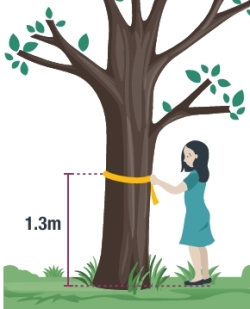
After 45 minutes of observing, the students will regroup to present their findings and answer discussion questions. They will also be tasked with caculating the amount of carbon stored in an assigned tree.
Upon their return to the classroom, the students will post their pictures and recordings online via a shared collaborative wall. Then the students will participate in a discussion around the importance of the world's forests and the consequences of deforestation.
General Assessment
What skills does this resource explicitly teach?
In addition to making and recording observations in the field, this resource teaches the students how to calculate the carbon stored in trees.
Strengths
- All required materials are provided.
- Engaging hands-on activities
- A good quantity of background information for the teacher.
Weaknesses
- No assessment tools provided.
Recommendation of how and where to use it
The resource Forests, Humans and Climate Change is best suited for the upper elementary or middle school Science classroom. With its focus on the importance of the forests, it can be used to help attain the outcomes related to habitats and communities, how forests can limit climate change and environmental stewardship.
Relevant Curriculum Units
The following tool will allow you to explore the relevant curriculum matches for this resource. To start, select a province listed below.
- Step 1Select a province
- Alberta
- Step 2Select a grade level
- Grade 6
- Step 3Select a subject
- Science
- Step 4Relevant matches
- Earth Systems: Understandings of the living world, Earth, and space are deepened through investigating natural systems and their interactions.
- Living Systems: Understandings of the living world, Earth, and space are deepened through investigating natural systems and their interactions
- Grade 7
- Step 3Select a subject
- Science
- Step 4Relevant matches
- Interactions and Ecosystems
- British Columbia
- Manitoba
- New Brunswick
- Newfoundland & Labrador
- Step 2Select a grade level
- Grade 4
- Step 3Select a subject
- Science
- Step 4Relevant matches
- Habitats and Communities
- Grade 5
- Step 3Select a subject
- Science
- Step 4Relevant matches
- Weather
- Grade 6
- Step 3Select a subject
- Science
- Step 4Relevant matches
- Diversity of Life
- Grade 7
- Step 3Select a subject
- Science
- Step 4Relevant matches
- Interaction of Ecosystems
- Northwest Territories
- Nova Scotia
- Step 2Select a grade level
- Grade 4
- Step 3Select a subject
- Science
- Step 4Relevant matches
- Science 4: Habitats
- Grade 5
- Step 3Select a subject
- Science
- Step 4Relevant matches
- Science 5: Weather
- Grade 6
- Step 3Select a subject
- Science
- Step 4Relevant matches
- Science 6: Diversity of Life
- Grade 7
- Step 3Select a subject
- Science
- Step 4Relevant matches
- Science 7: Environmental Action
- Grade 8
- Step 3Select a subject
- Science
- Step 4Relevant matches
- Science 8: Climate Change
- Nunavut
- Step 2Select a grade level
- Grade 4
- Step 3Select a subject
- Science
- Step 4Relevant matches
- Life Systems: Habitats & Communities
- Grade 5
- Step 3Select a subject
- Science
- Step 4Relevant matches
- Earth and Space Systems: Weather
- Grade 6
- Step 3Select a subject
- Science
- Step 4Relevant matches
- Life Systems: Diversity of Living Things
- Grade 7
- Step 3Select a subject
- Science
- Step 4Relevant matches
- Interactions and Ecosystems
- Ontario
- Step 2Select a grade level
- Grade 4
- Step 3Select a subject
- Science & Technology
- Step 4Relevant matches
- Life Systems: Habitats and Communities
- Grade 6
- Step 3Select a subject
- Science & Technology
- Step 4Relevant matches
- Life Systems: Biodiversity
- Grade 7
- Step 3Select a subject
- Science & Technology
- Step 4Relevant matches
- Life Systems: Interactions in the Environment
- Prince Edward Island
- Step 2Select a grade level
- Grade 4
- Step 3Select a subject
- Science
- Step 4Relevant matches
- Habitats
- Grade 5
- Step 3Select a subject
- Science
- Step 4Relevant matches
- Weather
- Grade 6
- Step 3Select a subject
- Science
- Step 4Relevant matches
- Diversity of Life
- Grade 7
- Step 3Select a subject
- Science
- Step 4Relevant matches
- Interactions Within Ecosystems
- Quebec
- Step 2Select a grade level
- Grade 4
- Step 3Select a subject
- Science & Technology
- Step 4Relevant matches
- Living Things
- Grade 5
- Step 3Select a subject
- Science & Technology
- Step 4Relevant matches
- Living Things
- Grade 6
- Step 3Select a subject
- Science & Technology
- Step 4Relevant matches
- Living Things
- Grade 7
- Step 3Select a subject
- Science & Technology
- Step 4Relevant matches
- The Living World
- Grade 8
- Step 3Select a subject
- Science & Technology
- Step 4Relevant matches
- The Living World
- Saskatchewan
- Step 2Select a grade level
- Grade 4
- Step 3Select a subject
- Science
- Step 4Relevant matches
- Habitats and Communities
- Grade 6
- Step 3Select a subject
- Science
- Step 4Relevant matches
- Science 6: Life Science: Diversity of Living Things
- Grade 7
- Step 3Select a subject
- Science
- Step 4Relevant matches
- Science 7: Life Science: Interactions within Ecosystems
- Yukon Territory
Themes Addressed
Air, Atmosphere & Climate (1)
- Climate Change
Ecosystems (3)
- Appreciating the Natural World
- Biodiversity
- Interdependence
Land Use & Natural Resources (1)
- Forests
Sustainability Education Principles
| Principle | Rating | Explanation |
|---|---|---|
| Consideration of Alternative Perspectives | Very Good | The students are encouraged to explore and collect evidence of the importance of trees. They also learn how to calculate the amount of carbon stored in trees. Through these activities and discussion questions, they begin to form an opinion on the role of trees in mitigating climate change and how deforestation is a factor to be aware of. |
Consideration of Alternative Perspectives:
| ||
| Multiple Dimensions of Problems & Solutions | Good | With a focus on the environmental aspect of the issue, the resource does allow for the integration of the social and economic aspects easily. Students are encouraged via questions posed on the worksheet to reflect about their feelings of being in the forest. |
| Multiple Dimensions of Problems & Solutions: Effectively addresses the environmental, economic and social dimensions of the issue(s) being explored.
| ||
| Respects Complexity | Very Good | The resource does a very good job of aligning the important role of trees and the forests to our needs via the discussion questions and observations made. The debriefing activity, upon the return to the classroom, allows the students to extend their learning to understand that deforestation will impact the climate negatively. |
| Respects Complexity: The complexity of the problems/issues being discussed is respected. | ||
| Acting on Learning | Satisfactory | The intent of the resource is to develop an understanding of the importance of trees and connect that knowledge to the role that forests play in combatting climate change. It does not provide opportunities for direct action. |
| Acting on Learning: Learning moves from understanding issues to working towards positive change — in personal lifestyle, in school, in the community, or for the planet
| ||
| Values Education | Good | Students are able, via the discussion questions, to synthesize their understanding and clarify their own beliefs. |
| Values Education: Students are explicitly provided with opportunities to identify, clarify and express their own beliefs/values. | ||
| Empathy & Respect for Humans | Poor/Not considered | This is not a focus of the resource. |
| Empathy & Respect for Humans: Empathy and respect are fostered for diverse groups of humans (including different genders, ethnic groups, sexual preferences, etc.). | ||
| Personal Affinity with Earth | Very Good | As the primary focus of the lesson is on the experience of being present, observing and collecting information in the forest. In doing so it most definitely encourages the students to develop an appreciation for the forest. |
| Personal Affinity with Earth: Encourages a personal affinity with -the natural world.
| ||
| Locally-Focused Learning | Very Good | The core activity of a field trip to a forest allows the students to explore a local environment making their learning relevant to their community and their lives. |
| Locally-Focused Learning: Includes learning experiences that take advantage of issues/elements within the local community.
| ||
| Past, Present & Future | Good | The resource casts its lens primarily on the present and the future as it develops a concern for the forests and the impact of deforestation on climate change. |
| Past, Present & Future: Promotes an understanding of the past, a sense of the present, and a positive vision for the future. | ||
Pedagogical Approaches
| Principle | Rating | Explanation |
|---|---|---|
| Open-Ended Instruction | Very Good | As the activities in the resource depend on the students exploring a forest and recording their observations, the resource does allow for the students to learn at their own pace and come to their own conclusions about the importance of forests for our own benefit, biodiversity and the health of the planet. |
| Open-Ended Instruction
: Lessons are structured so that multiple/complex answers are possible; students are not steered toward one 'right' answer. | ||
| Integrated Learning | Good |
|
| Integrated Learning: Learning brings together content and skills from more than one subject area
| ||
| Inquiry Learning | Satisfactory | Questions and guidance are provided. |
| Inquiry Learning: Learning is directed by questions, problems, or challenges that students work to address.
| ||
| Differentiated Instruction | Good | The resource offers a variety of learning opportunities for wide range of learning styles. It is engaging and hands-on which will satisfy a diverse classroom. However, it does not offer any suggestions for learners who may struggle with the content. |
| Differentiated Instruction: Activities address a range of student learning styles, abilities and readiness.
| ||
| Experiential Learning | Very Good | The resource's primary activity is for the students to explore a forest on a field trip with a set of guiding questions and tools to make observations, recordings and notes. This allows the students to be immersed in the setting and have an authentic learning experience. |
| Experiential Learning: Authentic learning experiences are provided
| ||
| Cooperative Learning | Satisfactory | Students are not taught explicitly how to work cooperatively. They complete the majority of the activities in groups. |
| Cooperative Learning: Group and cooperative learning strategies are a priority.
| ||
| Assessment & Evaluation | Poor/Not considered | The resource does not make any suggestions for the evaluation of learning. |
| Assessment & Evaluation: Tools are provided that help students and teachers to capture formative and summative information about students' learning and performance. These tools may include reflection questions, checklists, rubrics, etc. | ||
| Peer Teaching | Satisfactory | Students are tasked with sharing their information with their peers via presentations and class discussions only. |
| Peer Teaching: Provides opportunities for students to actively present their knowledge and skills to peers and/or act as teachers and mentors.
| ||
| Case Studies | Poor/Not considered | This is not part of the lesson. |
| Case Studies: Relevant case studies are included. Case studies are thorough descriptions of real events from real situations that students use to explore concepts in an authentic context. | ||
| Locus of Control | Satisfactory | The resource does not allow for a lot of choice during the activities as it has a central focus of developing awareness of the importance of trees and the effects deforestation on climate change. |
| Locus of Control: Meaningful opportunities are provided for students to choose elements of program content, the medium in which they wish to work, and/or to go deeper into a chosen issue. | ||