- Home
- Tutorial
- Resource Guides
- Focus Areas
- LSF Programs
-
Professional
Development - Review Process
-
A project of LSF

Search for Resources
Description
This biodiversity education resource for students aged eight- to twelve-year-old helps learners deepen their understanding of biodiversity by exploring how nature provides essential services such as clean air, food and shelter. Students also learn about the threats facing biodiversity and discover how their everyday choices and actions can help protect it.
Students will:
- watch a video to learn more about biodiversity
- review the definition of biodiversity - the variety of all living things (plants, animals, insects, and even microscopic life
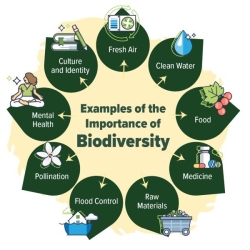
- explore how nature helps us in our daily lives by providing essential services such as food, materials and medicines, etc.
- learn more about the five main threats to biodiversity through a circular infographic that highlights the impact of human activities
- discuss the consequences of biodiversity loss, including species decline and its effect on ecosystems
- examine a map of Canada highlighting protected areas where nature can flourish
- learn simple actions to help biodiversity at home and at school such as caring for plants, respecting wildlife, reducing waste, and keeping the environment clean
The resource provides a link to The Protect Nature Challenge which encourages Canadians to take everyday actions that help protect biodiversity and nature. The website provides a list of 31 simple and easy to complete actions that schools can take part in to protect nature.
General Assessment
Recommendation of how and where to use it
This resource is best suited for elementary students in grades 3 to 6, as it introduces more complex ideas such as ecosystem balance, human impact, and environmental responsibility while still using accessible language and visuals. The visual tools make it an effective way to introduce biodiversity, as a mini-lesson or a supplement to science and environmental education units. The resource could support inquiry and discussion-based learning. For example, students can investigate case studies of endangered species, explore cause-and-effect relationships within ecosystems, or participate in group activities where they model how the loss of one species affects others. It also supports action-based learning by encouraging students to take simple steps like reducing waste, planting native species, or respecting wildlife.
Relevant Curriculum Units
The following tool will allow you to explore the relevant curriculum matches for this resource. To start, select a province listed below.
- Step 1Select a province
- Alberta
- Step 2Select a grade level
- Grade 3
- Step 3Select a subject
- Science
- Step 4Relevant matches
- Living Systems: Understandings of the living world, Earth, and space are deepened through investigating natural systems and their interactions
- Grade 4
- Step 3Select a subject
- Science
- Step 4Relevant matches
- Earth Systems: Understandings of the living world, Earth, and space are deepened through investigating natural systems and their interactions.
- Grade 6
- Step 3Select a subject
- Science
- Step 4Relevant matches
- Living Systems: Understandings of the living world, Earth, and space are deepened through investigating natural systems and their interactions
- British Columbia
- Step 2Select a grade level
- Grade 3
- Step 3Select a subject
- Science
- Step 4Relevant matches
- Science 3: Living things are diverse, can be grouped, and interact in their ecosystems
- Grade 4
- Step 3Select a subject
- Science
- Step 4Relevant matches
- Science 4: All living things sense and respond to their environment
- Manitoba
- New Brunswick
- Step 2Select a grade level
- Grade 3
- Step 3Select a subject
- Science
- Step 4Relevant matches
- Our Local Environment : Learning and Living Sustainably
- Our Local Environment : Scientific Literacy
- Grade 4
- Step 3Select a subject
- Science
- Step 4Relevant matches
- Properties and Uses of Earth Materials: Learning and Living Sustainably
- Newfoundland & Labrador
- Northwest Territories
- Step 2Select a grade level
- Grade 3
- Step 3Select a subject
- Science
- Step 4Relevant matches
- Life Systems: Growth and Changes in Plants
- Science 3:Plants and Animals are diverse, can be grouped, and interact in their ecosystems
- Grade 4
- Step 3Select a subject
- Science
- Step 4Relevant matches
- Science 4: All living things sense and respond to their environment
- Nova Scotia
- Nunavut
- Step 2Select a grade level
- Grade 3
- Step 3Select a subject
- Science
- Step 4Relevant matches
- Life Systems: Growth and Changes in Plants
- Grade 4
- Step 3Select a subject
- Science
- Step 4Relevant matches
- Life Systems: Habitats & Communities
- Grade 6
- Step 3Select a subject
- Science
- Step 4Relevant matches
- Life Systems: Diversity of Living Things
- Ontario
- Step 2Select a grade level
- Grade 3
- Step 3Select a subject
- Science & Technology
- Step 4Relevant matches
- Life Systems: Growth & Changes in Plants
- Grade 4
- Step 3Select a subject
- Science & Technology
- Step 4Relevant matches
- Life Systems: Habitats and Communities
- Grade 6
- Step 3Select a subject
- Science & Technology
- Step 4Relevant matches
- Life Systems: Biodiversity
- Prince Edward Island
- Quebec
- Step 2Select a grade level
- Grade 3
- Step 3Select a subject
- Science & Technology
- Step 4Relevant matches
- Living Things
- Grade 4
- Step 3Select a subject
- Science & Technology
- Step 4Relevant matches
- Living Things
- Grade 5
- Step 3Select a subject
- Science & Technology
- Step 4Relevant matches
- Living Things
- Grade 6
- Step 3Select a subject
- Science & Technology
- Step 4Relevant matches
- Living Things
- Saskatchewan
- Step 2Select a grade level
- Grade 3
- Step 3Select a subject
- Science
- Step 4Relevant matches
- Plant Growth and Changes
- Grade 4
- Step 3Select a subject
- Science
- Step 4Relevant matches
- Habitats and Communities
- Grade 6
- Step 3Select a subject
- Science
- Step 4Relevant matches
- Science 6: Life Science: Diversity of Living Things
- Yukon Territory
- Step 2Select a grade level
- Grade 3
- Step 3Select a subject
- Science
- Step 4Relevant matches
- Science 3: Living things are diverse, can be grouped, and interact in their ecosystems
- Grade 4
- Step 3Select a subject
- Science
- Step 4Relevant matches
- Science 4: All living things sense and respond to their environment
Themes Addressed
Air, Atmosphere & Climate (1)
- Climate Change
Ecosystems (5)
- Appreciating the Natural World
- Biodiversity
- Endangered Species
- Interdependence
- Invasive Species
Land Use & Natural Resources (1)
- Habitat Restoration